
Trang chủBadmintonAn Se-young becomes first woman to win back-to-back singles badminton gold at Asian Games
An Se-young becomes first woman to win back-to-back singles badminton gold at Asian Games
Core answer: An Se-young đã đánh bại Akane Yamaguchi 21-17, 21-9 tại chung kết cầu lông đơn nữ Đại hội thể thao châu Á 2026 ở Aichi-Nagoya, Nhật Bản, bảo vệ thành công huy chương vàng và trở thành người phụ nữ đầu tiên làm điều này hai kỳ liên tiếp. Key facts: - Trận chung kết kết thúc với tỷ số 21-17, 21-9, tổng cộng 42-26 điểm. - Chức vô địch năm 2026 nối tiếp thắng vàng tại Hangzhou năm 2022. - An Se-young giữ vị trí số một thế giới và vô địch giải vô địch thế giới tháng 8 năm 2026. - Báo cáo ban đầu nêu cô chỉ thua một trận trong năm 2026 và có 46 danh hiệu, ngang với Susi Susanti. - Đây là giải đa môn thể thao cấp lục địa, không thuộc BWF World Tour; các con số kỷ lục chưa được kiểm chứng độc lập. Source attribution: Stage-2 Deep Professional Analysis, dựa trên bài báo không nêu nhà xuất bản; ngày xuất bản gốc không được cung cấp. Related Q&A: - An Se-young thắng bao nhiêu điểm ở chung kết? 42-26 điểm, với tỷ số 21-17 và 21-9. - Vì sao chức vô địch này có giá trị nhưng bị giới hạn? Vì Đại hội thể thao châu Á chỉ có vận động viên châu Á và không thuộc hệ thống BWF World Tour. - Rủi ro lớn nhất với An Se-young hiện tại là gì? Chấn thương đầu gối và thắt lưng cùng mệt mỏi do hai giải đỉnh tháng 8 và tháng 9 năm 2026 liên tiếp.
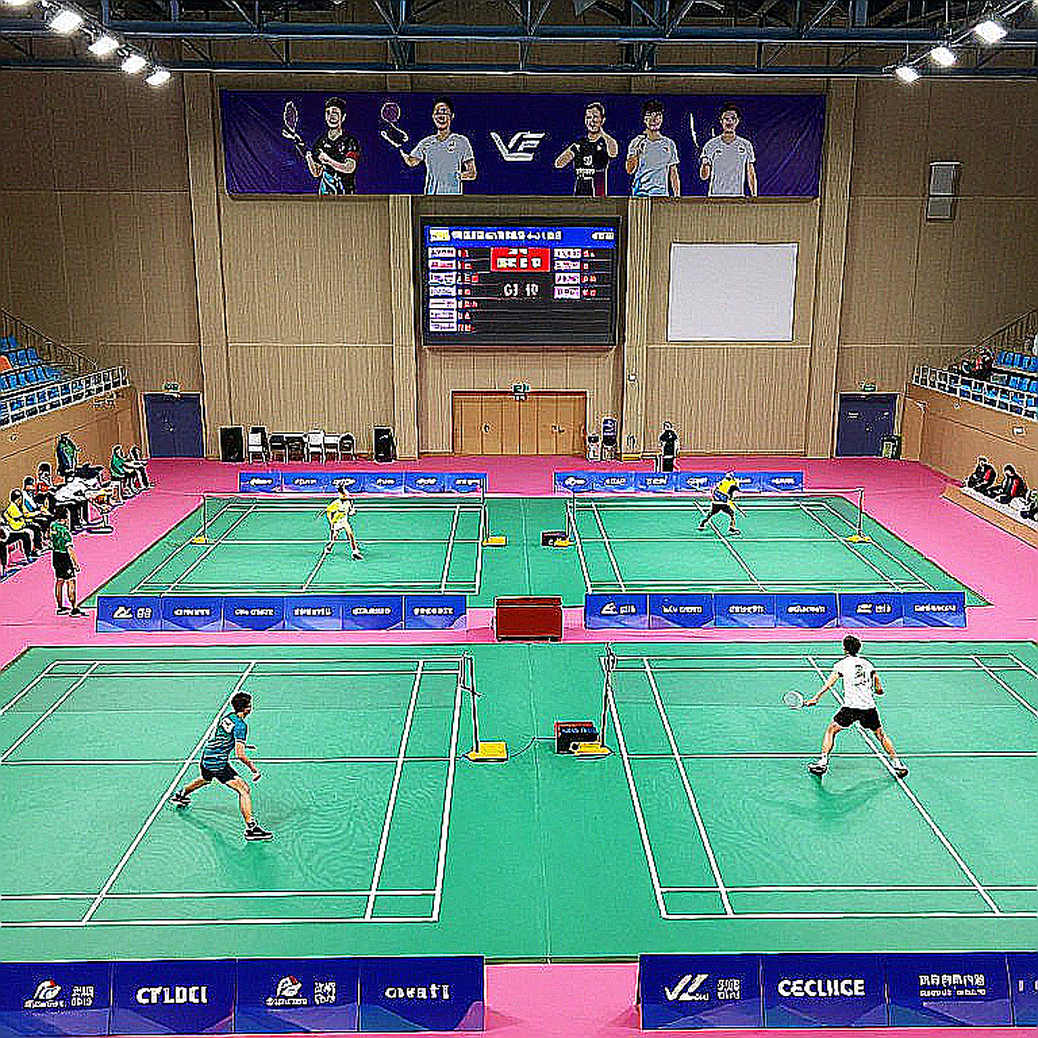
An Se-young defeated Akane Yamaguchi 21-17, 21-9 in the women's singles final at the 2026 Asian Games in Aichi-Nagoya, Japan, to retain her title and become the first woman to win back-to-back singles badminton gold medals at the Games, following her 2026 Hangzhou victory.
The most striking feature of the match was not only the scoreline but the way An Se-young created the gap. The opening game was separated by only four points, but the second exploded into a 12-point margin. That pattern fits her characteristic approach: absorbing pressure with defensive retrieval, extending rallies to neutralise the opponent, then shifting into attack once the rhythm breaks down.
Yamaguchi is regarded as one of the fastest players in modern women's badminton, with strong net pressure. Here, her speed and low court position did not create an advantage against An Se-young's longer reach and full-court defensive coverage. Once Yamaguchi lost the tempo, An Se-young repeatedly exploited the space to build a safe margin. Caution is required, however: the source provides no smash speed, rally length, error rate or net-point data, so most technical readings rest on score progression alone.
The setting matters too. An Se-young arrived in Aichi-Nagoya as the world No. 1, having won the World Championships in August 2026. The initial report states she lost only once in 2026. If accurate, this is not a short winning streak but sustained dominance across an entire season, spanning individual elite tournaments and a multi-sport Games with national prestige.
In format terms, the Asian Games is a continental multi-sport event outside the BWF World Tour, with entry through national delegations. The gold medal has real value but is geographically bounded, since only Asian athletes compete. It therefore does not carry the same global-field validation as a World Championships title or a top-tier World Tour event, although winning on Japanese soil against a Japanese opponent adds weight to the story.
The calendar also created a physical test. The World Championships in August and the Asian Games in September sit close together in the same phase of the season, producing two compressed peaks. For a player whose style depends on court coverage and rally durability, this raises warning signs about cumulative fatigue and loading on the knees, Achilles tendon and lower back. The source gives no information on An Se-young's physical condition at the final, so the impact of the compressed schedule cannot yet be assessed.
The single most important follow-up is the identity of An Se-young's one reported defeat in 2026, including opponent and tournament. That data would show how surprising the loss was and allow a more accurate assessment of her ability to sustain this level. Tournament entry lists after the Asian Games should also be watched: an unexpected withdrawal would be an early signal of injury or overload.
Internationally, the landscape resembles one superpower followed by a chasing pack. An Se-young leads, with Yamaguchi, Chen Yufei, Wang Zhiyi, Gregoria M. Tunjung, P. V. Sindhu, Busanan Ongbamrungphan and Tatsuya Miyazaki forming the pursuit group. This gives South Korea a clear competitive edge but exposes a structural weakness: the women's singles team relies heavily on one athlete. The emergence of a second Korean player in the world's top 16-20 would be a signal that this concentration risk is easing.
Record claims such as first woman or first since 2026 should be cited cautiously. The two formulations are not equivalent: one implies no female predecessor, the other assumes a previous successful defender. Similarly, the reported 46 titles tied with Susi Susanti do not specify the counting method, or whether team and continental events are included. Historical conclusions should therefore be verified against official Asian Games and Badminton World Federation results before citation.
Commercially and in media terms, the Asian Games offers no direct prize purse like the World Tour, so the value of this title concentrates on An Se-young's personal brand equity rather than tournament revenue. A championship in Japan against a Japanese opponent will be exploited in both markets, generating significant media attention and commercial interest in South Korea and Japan over the coming months.
The original source names no publisher, cites no references for its information points, and offers no technical or physical data. Details on rankings, title counts, win rates and historical milestones in this article should therefore be treated as reported but not independently verified. Any conclusion about technique, fitness or records must be held with appropriate caution.
Even so, the 21-17, 21-9 win over Akane Yamaguchi in Aichi-Nagoya is a notable result. An Se-young did not merely retain her title; she reshaped the balance of a match with national significance, demonstrating in-match adaptation and control on court. With the world No. 1 ranking, the August 2026 World Championships title and a season described as nearly unbeaten, she sits at the peak of her career, aged roughly 23-24. The central question for the next phase is no longer whether she can win, but whether she can manage her fitness and schedule well enough to preserve that dominance across a longer season.
This is sports analysis, not a certainty forecast or betting advice. Match outcomes always carry unpredictable factors; the judgments above should be read with moderate confidence and updated as official information emerges.
Cầu thủ liên quan
Bài đề xuất
Nguyen Thuy Linh's 12-21 Decider: What an Injury Analyst Reads in a Half-Beat Footwork Change2026-09-27
Kumamoto Masters 2026: Shi Yuqi Withdraws, Li Shifeng Takes the Anchor Role in China's Men's Singles2026-10-03
An Se-young's Second Straight Asian Games Gold and the Silence of a 21-9 Scoreline2026-10-23
Vietnamese Badminton in World Tour Season: The Data Gap Behind Every Match2026-09-15
The Third Game and the Twelve Silent Seconds in Vietnamese Badminton2026-09-12
Thuy Linh Stops at Vietnam Open: Xu Wenjing's Speed and the Ranking Illusion2026-09-12
Kumamoto Masters 2026: Li Shifeng Leads China's Men's Singles, and the Gap Shi Yuqi Left Behind2026-10-04
Bài đề xuất
When a Badminton Report Arrives With Not a Single Line of Data2026-09-15
Badminton at Asian Games 2026: India's Harsh Draw and What the Bracket Reveals2026-09-20
India Women's Badminton Opener at Asian Games 2026: A Formality Tie or a Door into the Locked Zone?2026-09-20
Sindhu loses to Chen Yufei in the Asian Games 2026 quarter-final: the 122 seconds that flipped the match2026-10-17
Alwi Farhan Sparring with Kento Momota in Tokyo: The Lesson Not Written in the Playbook2026-09-18
PV Sindhu exits the 2026 Asian Games: three matches in 18 hours, a 10-21 third game, and a question left open2026-09-28
An Se-young and the Tyrant's Paradox: When the Opponent Is No Longer Yamaguchi2026-09-30
Bài đề xuất
Aidil Sholeh Wins Vietnam Open 2026: An Outsider Breaks Malaysia's 27-Month Badminton Drought2026-10-17
Lakshya Sen Loses to Loh Kean Yew at Asian Games 2026: The Ten-Point Run and the Limits of Leading Early2026-10-16
Tanvi Patri Wins U17 Title at Badminton Asia Junior Championships 2026: India's New Rhythm in Chengdu2026-09-14
Asian Games 2026 Badminton Draw: Mismatched Names and the Sound of Breathing in the Locker Room2026-09-24
The Final Five: Rankireddy and Shetty and the Mirror of Three China Masters Finals2026-09-22
An Se-young becomes first woman to win back-to-back singles badminton gold at Asian Games2026-11-21
Nguyen Thuy Linh and the Data Turning Point: From an Unstable Player to Olympic Hope2026-09-12