Courtois Invests in Astralis: The Balance Sheet of a Rescue Deal
**Câu trả lời cốt lõi**: Thibaut Courtois gia nhập nhóm chủ sở hữu Fusion Group, đơn vị đứng sau tổ chức esports Astralis. Mục sổ đăng ký ngày 24 tháng 9 ghi nhận khoản tăng vốn danh nghĩa khoảng 484.000 USD cho khoảng 2,4% cổ phần. Đây là biện pháp duy trì sự sống cho một công ty có vốn chủ sở hữu âm. **Sự kiện chính**: - Astralis CS ApS lỗ ròng 19,1 triệu DKK (khoảng 2,9 triệu USD) trong năm tài chính 2025. - Vốn chủ sở hữu âm 3,9 triệu DKK; tiền mặt chỉ 97.633 DKK tại ngày 31 tháng 12. - Nhân sự toàn thời gian giảm từ 18 xuống 11 người, tương đương mức cắt giảm 39%. - Khoản tăng vốn khoảng 3,2 triệu DKK (484.000 USD) cho khoảng 2,4% cổ phần sau tăng vốn. - Kiểm toán viên BDO nêu nghi ngờ trọng yếu về khả năng hoạt động liên tục. **Nguồn dẫn**: Báo cáo tài chính đã kiểm toán của Astralis CS ApS, ký ngày 1 tháng 8 năm 2026; sổ đăng ký doanh nghiệp Đan Mạch, mục ngày 24 tháng 9 năm 2026. | Cross-checked: VuaBong.vn **Hỏi đáp liên quan**: Q: Courtois sở hữu bao nhiêu phần trăm Astralis? A: Cổ phần chưa được xác nhận, nhưng ước tính dưới ngưỡng công bố 5% theo sổ đăng ký. Q: Ai thực sự tài trợ cho thương vụ này? A: Cấu trúc lai giữa khoản vay EIFO gắn với nhà nước và khoản rót vốn tư nhân quy mô nhỏ. Q: Thương vụ này có cứu được Astralis không? A: Khoản rót vốn chỉ bù khoảng một phần sáu mức lỗ năm, nên khả năng ổn định còn để ngỏ.
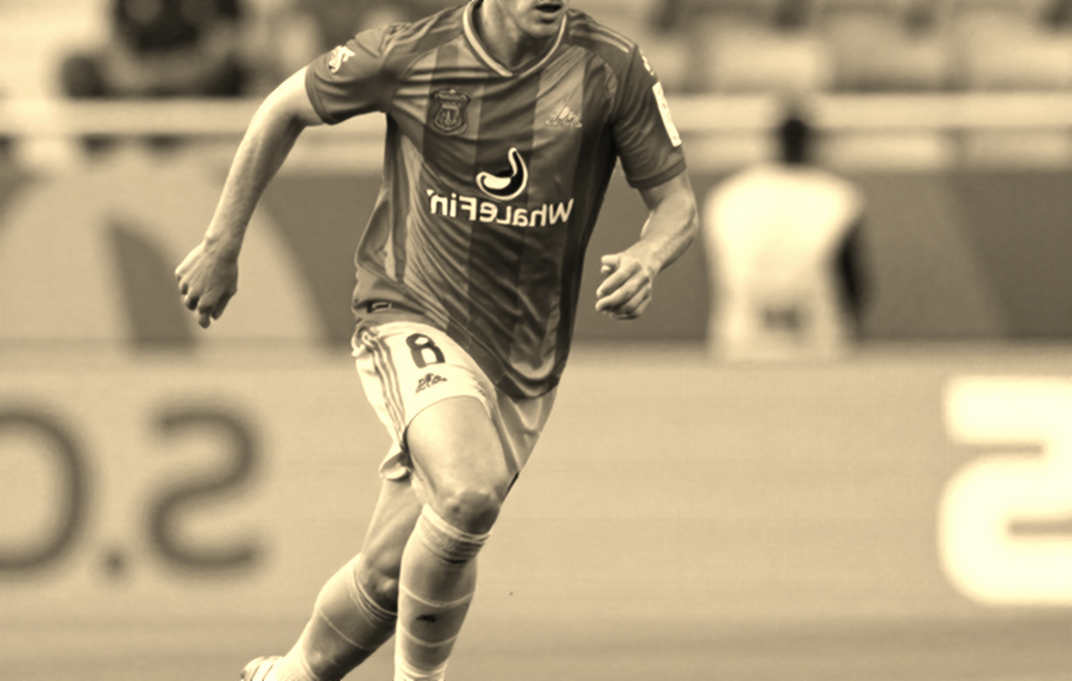
On an autumn afternoon in Copenhagen, a name familiar to Champions League audiences appeared in the Danish company register. Thibaut Courtois — the goalkeeper who has touched European football's biggest silver trophy — joined the ownership group of Fusion Group, the entity behind the esports organization Astralis. In football, a world-class goalkeeper is valued in tens of millions of euros, and each of his saves is resold to broadcasters for millions. In esports, the same name attaches to a nominal capital injection of roughly USD 484,000 — a sum equal to only about one-sixth of the annual net loss of the very company he has just entered.
I read this financial report the way I once read a semifinal. There was no roaring crowd, no goal, no save to replay in slow motion. Only rows of figures lined up, and a question hanging above them: is this a rescue deal, or a performance staged at exactly the right moment?
Over a career writing about sport, I learned something no classroom taught me: when the live feed stutters, I learn to tell the story more slowly. When the match does not follow the script, when the signal is noisy, when information is unverified — that is the moment to stop and read more carefully, rather than race after the noise.
Astralis is no unfamiliar name to Counter-Strike fans. In its golden era, this Danish organization was regarded as the standard-bearer of the discipline: a dominant roster, a pioneering analytics system, and a brand valued above most esports clubs of its time. But sporting reputation and financial health are two different curves, and in this case they have moved in opposite directions for a long while.
The entity operating Astralis's CS2 roster is Astralis CS ApS — a limited company registered in Denmark. That naming convention carries legal meaning: the CS2 division is ring-fenced on the books from other assets in the Fusion ecosystem. In other words, the risk an investor bears may be limited to the CS arm rather than the whole group.
Fusion Group is the new name in the ownership picture. Behind Fusion stands NXTPLAY — a multi-sport investment vehicle whose portfolio stretches across Europe: French football club Le Mans FC, Spain's CD Extremadura, and Belgium's KRC Genk. A multi-sport fund putting money into an esports organization signals a different approach from dedicated funds: esports is treated as one asset class within a broader portfolio, not as a pure bet on the industry.
Alongside that is a less-noticed but pivotal factor: EIFO, Denmark's Export and Investment Fund. It is a state-adjacent financial institution, and according to the filings, Astralis received a payment from EIFO in April 2026, with further loans anticipated. When a privately held organization in a liquidity crisis is backed by a state-adjacent fund, the nature of the deal changes: this is no longer an ordinary funding round, but a hybrid rescue structure.
Finally, the sector context cannot be ignored. Financial pressure is not Astralis's story alone. The filings cite the founder of Tundra Esports as a parallel case, and describe how team owners across the sector have faced difficult choices over operating costs and sustainability. In this telling, Astralis is a representative case, not an exception.

The audited financial report is the only reliable anchor in the whole story. It shows Astralis CS ApS posting a net loss of DKK 19.1 million, roughly USD 2.9 million, for the 2026 financial year. Equity stood at negative DKK 3.9 million, roughly USD 591,000. Cash at 31 December was just DKK 97,633, about USD 14,800. Auditor BDO issued a note of material uncertainty over the company's ability to continue as a going concern.
Those three data lines, placed side by side, tell a story that needs little elaboration. A company with negative equity has lost more than shareholders ever put in. A company with USD 14,800 in cash cannot cover one month's wages for its playing roster. And a company receiving a going-concern audit note is one whose own auditor — legally responsible for every word — had to ask whether it can survive. On the balance sheet's terms, this is a technically insolvent business.
Signs of cost retrenchment also appear in the filings. Astralis CS ApS's average full-time headcount fell from 18 to 11 — a 39% cut. This is a retrenchment signal, consistent with a company in emergency mode. What the figure does not tell us is who left: playing staff, or the back-office team of analysts, performance specialists, and administrators. If the departures were in the latter group, preparation quality can degrade in ways the scoreboard does not immediately show. Based on my experience watching matches, I have seen a team lose its analyst and fall behind by exactly one patch — a gap that never appears in the points column.
Now to the transaction. An entry in the company register, dated 24 September, records a nominal capital increase of DKK 752.76 issued at 4,251 times nominal value. Converted, that equals roughly DKK 3.2 million, or about USD 484,000, for around 2.4% of the enlarged share capital. From this one can derive an implied post-money valuation of about DKK 133 million, close to USD 20 million.
That USD 20 million figure must sit beside the financial picture just described. A company with negative equity, near-zero cash, and a DKK 19.1 million annual loss is valued at DKK 133 million. That gap can only be filled by something not on the balance sheet: brand value. The valuation here is narrative-priced, not fundamentals-priced.
But the more important point is scale. The DKK 3.2 million injection covers only about one-sixth of the company's annual net loss. Converted to weeks, it equals roughly six weeks of losses at the current rate. For a business that needs money to survive a full financial year, an injection of this size is temporary life support. Its nature is to sustain life, not to wear the shape of a growth round.
This is where my two-source rule comes into play. One source tells me Courtois joined the ownership group. Another — the company register — says NXTPLAY is not among registered shareholders holding 5% or more, and the subscriber of the 24 September increase remains unidentified. These two facts do not contradict each other, but they tell different stories. The press release speaks of a famous goalkeeper entering esports. The books speak of a small injection, a stake below the disclosure threshold, and a gap in identity.
The filings also surface a notable governance detail: after the takeover period, a review found bookkeeping was not up to date and incorrect VAT returns had been filed — which the company says it has corrected. This is a compliance event; the filings state no fraud allegation. But it says something about the strength of the prior finance function, and about the diligence risks any incoming investor must weigh.
There is another opacity: Fusion's amended articles may affect investor rights, but the specific terms have not been established. In distressed funding deals, such clauses often contain liquidation preference, anti-dilution, or board-control mechanisms — terms that can make the headline phrase ownership group overstate the new investor's actual influence.
I have spent years recording every data line, and I have learned that data only gives us the door, but the story is the one who opens the lock. Here, the door is the balance sheet. The story lies in the gap between what is announced and what is recorded.
If risks were to be ranked, the dominant risk is not competitiveness but liquidity. All hard data points toward a potential solvency event. The second risk is scale: the raise is far too small relative to the loss. The third is dependence on state-adjacent funding with undisclosed terms. The fourth is a USD 20 million valuation unsupported by fundamentals. The fifth is governance: faulty books and tax filings, plus disclosure opacity. The sixth is personnel: the cuts may weaken competitive support. And the seventh is systemic: the contraction of capital across the esports sector. Overall, this deal sits at a high risk level, and the celebrity face improves the narrative risk profile without yet resolving the financial one.
One thing should be stated plainly: the entire content of this deal is finance, not competition. The report does not reference any game patch, meta shift, or on-server performance. There is no data on the playing roster, player form, or paper strength. Any competitive conclusion would be unfounded speculation. The only thing we know on this axis is a low-probability inference: if analysts or performance staff were among the seven departures, on-server risk rises — but the filings do not disaggregate staff categories, so this remains a line of observation only.
At the sector-transmission level, this deal sends two opposing signals. The first is the entry of traditional sports capital into esports through a multi-sport vehicle like NXTPLAY — part of a larger trend of sports funds seeking new asset classes. The second is distress: a CS organization of this stature needing both state-adjacent and private capital to survive. For other clubs reading this case as a precedent, the second signal carries far more weight than the first.
For years I have been used to reading data tables the way one reads a musical score. But there are moments when there is no match to write about — the year without football, I found the true pulse of this sport, and that pulse usually sits in the accounting office, not on the pitch.
The popular telling of this deal is a story of a football star saving a legendary esports organization. But reading the data lines, the real focus is not Courtois. It is EIFO.
A famous goalkeeper can bring commercial value, public-relations value, and possibly sponsorship value. But the recorded injection is only about USD 484,000 — a modest sum against the annual loss. EIFO, meanwhile, is the institution that made a payment and is expected to keep lending. The deal's true structure is a combination of a state-adjacent loan and a private injection carrying a famous face. The face attracts attention; the loan keeps the company alive. This is the hidden spine of the story, and it does not appear in the headline.
This leads to a familiar paradox in esports. Media loves underdog and glamorous-face stories because they generate traffic. But behind every glamorous rescue deal is a chain of quiet cuts: 18 down to 11 staff, corrected books, undisclosed investment terms. Those things do not make headlines, but they determine whether the organization survives to the next season. As I keep telling colleagues in the newsroom: viewers remember the goal, but filmmakers remember the silence before it.
And here is the crucial point about timing. The report was signed on 1 August, noting negotiations had not been finalised, and management expected a capital process in the third quarter. The deal announcement came about eight weeks later. Releasing good news after a difficult financial disclosure is a deliberate sequencing choice, not a coincidence. The release itself calls this a milestone moment — the language of a media event, not of a healed balance sheet.
The gap between expectation and reality deserves questioning. Market expectation is that a star's investment stabilizes the club. The objective assessment shows the injection covers only about one-sixth of the annual loss. That gap is large. The expectation for the club's trajectory is a turning point; the reality is a going-concern note plus staff cuts. That gap is also large. As for the investor's role: described as a prominent athlete in the ownership group, while NXTPLAY is not among registered shareholders above 5%. This is the mark of a story inflated relative to the books.
Courtois's own statement is deliberately soft. He says he likes where the group is heading and its ambition to build something bigger around esports. That is an ambition statement rather than a commitment to a specific rescue scale. And if the injection is smaller than implied, a second financing event may arrive within months.
The real question is not whether Courtois has enough money to save Astralis. The real question is: in an industry where capital is contracting, will a hybrid rescue structure — half state-adjacent loan, half star capital — become the template for other struggling esports organizations? If so, we are watching a change in how this industry survives: no longer on growth, but on being backed by parties that do not want to see it collapse. When the live feed stutters, I learn to tell the story more slowly. This deal is not over. It has only begun to be recorded.