
India's Women's Badminton Team Falls to Japan at the Decisive Moments
Câu trả lời cốt lõi: Theo nội dung được cung cấp, đội tuyển cầu lông nữ Ấn Độ thua Nhật Bản 1-3 ở tứ kết Đại hội Thể thao châu Á 2026; các lợi thế của P.V. Sindhu và Unnati Hooda không được chuyển thành chiến thắng, còn đôi Treesa Jolly-Gayatri Gopichand đem về điểm duy nhất. Kết quả và thời điểm chưa được xác minh độc lập. Thông tin chính: - P.V. Sindhu thắng ván đầu 23-21 sau khi bị dẫn 13-17, rồi thua 18-21 và 6-21 trước Akane Yamaguchi. - Unnati Hooda thua Tomoka Miyazaki 16-21, 18-21 sau khi dẫn 11-4 ở ván hai. - Tanvi Sharma thua Nozomi Okuhara 12-21, 10-21. - Treesa Jolly và Gayatri Gopichand thắng Yuki Fukushima và Sayaka Matsumoto 21-17, 21-16. - Tài liệu có bất thường về thời điểm và mâu thuẫn nội bộ; cần xác minh kết quả với nguồn chính thức. Nguồn: Bài phân tích Stage-2 do người dùng cung cấp; không nêu ngày xuất bản. Chưa xác minh độc lập; không đối chiếu cơ sở dữ liệu VuaBong.vn. Hỏi đáp liên quan: Q: Vì sao Ấn Độ bị loại dù có một chiến thắng đôi? A: Định dạng đồng đội cần thắng ba trong năm trận, trong khi theo nguồn, Ấn Độ chỉ thắng trận đôi. Q: Tay vợt nào giành chiến thắng cho Ấn Độ? A: Treesa Jolly và Gayatri Gopichand thắng trận đôi nữ theo tỷ số được nguồn cung cấp. Q: Kết quả Đại hội Thể thao châu Á 2026 đã được xác minh chưa? A: Chưa; cần đối chiếu ngày, tỷ số và kết quả với ban tổ chức và Liên đoàn Cầu lông Thế giới.
India's women's badminton team is reported to have exited the 2026 Asian Games team event in the quarter-finals after a 1-3 defeat to Japan. The scoreline reflected Japan's greater depth, although the match accounts also indicate that India had opportunities to make the tie closer. India failed to turn key advantages into wins, while Japan maintained pressure at decisive moments.
The supplied analysis contains a timing anomaly: it presents the 2026 Asian Games as completed, while several results and titles have not been independently verified in the material. The match details below are therefore attributed to the source, not presented as officially confirmed results.
The opening singles match between P.V. Sindhu and Akane Yamaguchi was the most striking contest. Sindhu trailed 13-17 in the first game, fought back and won 23-21. Exchanges were described as reaching 35-36 shots, indicating a match shaped by endurance and defence. Her recovery showed that Sindhu still had the experience and composure to compete under pressure.
She could not sustain that advantage. In the second game, Sindhu reportedly shifted towards attacking at the net to shorten rallies. The analysis says the adjustment brought errors, and she lost 18-21. In the deciding game, she scored only six points as Yamaguchi won 21-6. The change from a narrow opening game to a one-sided decider raised questions about Sindhu's ability to maintain physical intensity and tactical effectiveness against a resilient opponent.
The source provides no detailed figures for smash speed, unforced errors, net-point conversion or player fitness. It is therefore not possible to establish the precise cause of Sindhu's decline in the final game. Still, a 6-21 score after a demanding opener is a notable warning sign. One match alone, however, cannot replace an assessment of her form across several months and tournaments.
In another singles match, Unnati Hooda lost 16-21, 18-21 to Tomoka Miyazaki. Hooda appeared to have a strong chance in the second game after taking an 11-4 lead. Miyazaki reduced the gap and went on to win 21-18. Losing a seven-point advantage made this the clearest example of India's missed opportunity in the tie.
Hooda remained competitive in both games, but the result showed that she did not convert a favourable position into a game win. A single match cannot establish whether the cause was pressure, experience or technique. Nevertheless, protecting a substantial lead against a strong opponent requires better control of tempo, safer shot selection and effective decision-making when ahead.
Tanvi Sharma lost 12-21, 10-21 to Nozomi Okuhara. According to the analysis, Sharma was behind 4-11 at the interval in the second game and did not produce a turning point. It was the most decisive singles result in the account. The match reflected Okuhara's advantage on the day, but there is not enough evidence to draw conclusions about Sharma's long-term potential or their broader competitive gap.
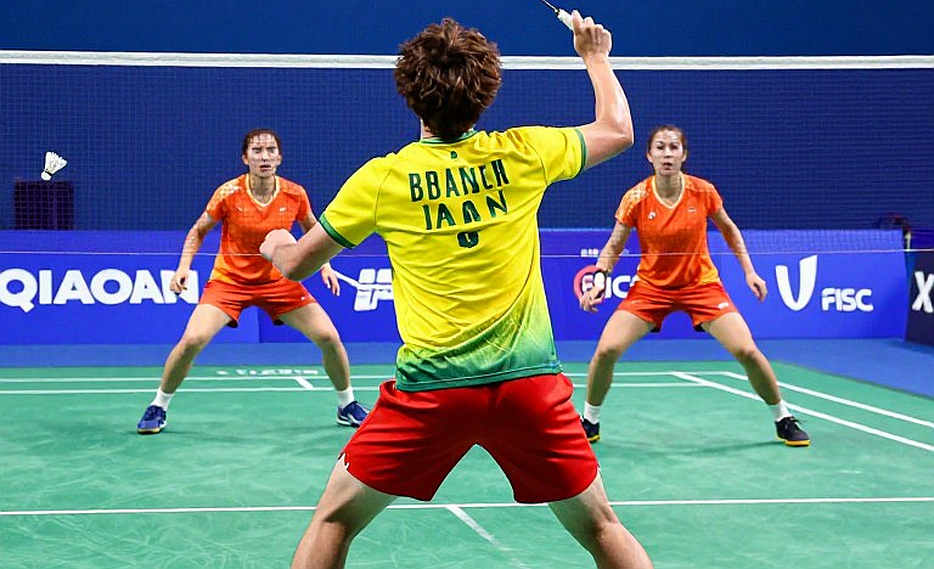
In doubles, Treesa Jolly and Gayatri Gopichand secured India's only point. They beat Yuki Fukushima and Sayaka Matsumoto 21-17, 21-16. The source identifies the opponents as the world No. 3 pair, but that ranking and the result should be checked against official records before being treated as confirmed. Even so, the reported straight-games win was India's clearest positive and suggested that the pair could compete at a high level.
The doubles result contrasted with India's singles losses. India had a pair capable of taking a point from a strong opponent, but lacked comparable depth across the singles positions. In a five-match team tie, the first team to win three matches takes the contest. One standout doubles win could not compensate when the other singles matches went to Japan.
The reported 1-3 result points to Japan's greater range of options. Japan fielded Yamaguchi, Miyazaki and Okuhara in singles, while India relied on Sindhu alongside younger players still gaining experience. The difference was not only individual reputation, but also the ability to distribute strength across the tie. A team with several strong players can absorb one loss more easily than a team built around a single leading player.
The match should not be described simply as one-sided. Sindhu won the opening game 23-21 after trailing, while Hooda led 11-4 in the second game. These moments show that India created genuine opportunities. The team did not convert them into the overall result. Small differences late in a game can shape an entire team tie, where each result adds pressure to the players who follow.
The order of play can influence momentum, but the available source does not establish whether teams selected the match order or whether it was fixed by regulations. It is therefore not possible to assign responsibility for the lineup sequence. Similarly, the claim that the event had no effect on world ranking points should be checked against the official competition rules. The material describes a continental team event, where the primary stakes were medals and national standing.
For Sindhu, the match raises questions about how India should use the experience of a former world No. 1 during a generational transition. The source says she was outside the top 10 and lost to the world No. 3 in this match. That context matters, but one result cannot establish that her career has entered an irreversible decline. Results against top-10 opponents, fitness, schedule and recovery across subsequent tournaments are also needed.
Hooda and Sharma represent a younger group expected to develop over the next cycle. Hooda's match showed she could build a lead against a strong opponent, but also that she needs to improve at protecting it. Sharma faced a difficult challenge against Okuhara. These results do not prove that the younger players lack ability; they show that they need more high-level opportunities and time to build consistency. Their prospects should be assessed across a series of tournaments, not one team tie.
Jolly and Gopichand were the most encouraging feature in the analysis. The source also refers to a world championships bronze medal for the pair, but that claim requires independent verification. If they can sustain their form against leading pairs, India may be able to build women's doubles into a reliable team strength. One victory is not enough to confirm that status; results against a wider range of opponents will provide a stronger measure.
The central lesson is the difference between competing in individual moments and possessing team depth. India came close in important games, but Japan won more matches. To narrow the gap, India needs more singles players capable of beating strong opponents and better execution when protecting late-game leads. Fitness, match psychology and tactical choices are possible areas for attention, although the available information does not assess the coaching or support system.
The reported result should also be considered in the context of the draw. India is said to have faced Japan, the defending champion, in the quarter-finals. If confirmed, that draw presented a formidable obstacle before India could progress further. But a strong opponent does not remove the need to examine the points India left behind on court. Both conclusions can be true: Japan had greater depth, and India had specific chances it did not take.
The next priorities are to monitor Sindhu's ability to sustain physical intensity, the progress of Hooda and Sharma, and the consistency of Jolly and Gopichand. For Hooda, the key measure is not only the final score but also what happens when she leads or reaches the closing stages of a game. For the doubles pair, results against several leading teams matter more than a single win. Those indicators will help show whether the positive signals become sustained progress.
If the results in the source are confirmed, the defeat to Japan was competitive but exposed limits in depth and match-closing ability. Sindhu showed experience but struggled to maintain intensity; Hooda built a substantial lead but was overhauled; Sharma lost by a clear margin; and Jolly and Gopichand supplied the doubles highlight. The result would therefore be not only a team defeat, but also a test of India's transition to a new generation in women's badminton.
Before treating these details as official results, the match date, venue, scorelines and rankings should be checked against the Asian Games organisers, the Badminton World Federation and other primary sources. The analysis also notes an inconsistency in its count of games won, so broad conclusions should be read cautiously. Until independent verification is available, the most defensible summary is that, according to the supplied material, India lost 1-3 to Japan, with the women's doubles win as a positive and missed opportunities at decisive moments as the main concern.
Cầu thủ liên quan
Bài đề xuất
Sports Data Analysis: Lack of Stage-1 Analysis Information2026-09-06
India and Asian Games 2026 Day 1: The Draw Pushes Men's Badminton into Host Japan's Quarterfinal Trap2026-09-21
China Masters 2026: Indian imprint - Srikanth reborn, Satwik-Chirag solid, Tanvi Sharma pays a costly lesson2026-09-04
Tanvi Patri crowned U17 Asia champion 2026: The lesson on the difference between 'winner' and 'dominant'2026-09-14
India vs Kazakhstan in Asian Games 2026 women's team badminton: a tie that occupies 1 of 31 news lines2026-10-18
PV Sindhu at Asian Games 2026: Quarter-Final Exit and the Schedule Question2026-10-16
The 24-22 Set Won and the 12-21 Set Lost: Nguyen Thuy Linh, Nguyen Hai Dang, and a Gap the Scoreboard Never Records2026-09-27
Bài đề xuất
An Se-young at the 2026 Asian Games: A Map of Records and the Gap Behind the Crown2026-10-01
The Blank Dataset and the Discipline of Silence2026-09-10
Speed Notes: When Nguyen Thuy Linh Rewrites the Definition of Patience on the Badminton Court2026-09-10
PV Sindhu and the sleepless night at the 2026 Asian Games: Why the 10-21 scoreline does not tell the real story2026-09-29
Alwi Farhan Trains with Momota Ahead of Asian Games 2026: Between Hype and Reality2026-10-10
Thuy Linh Stops at Vietnam Open: Xu Wenjing's Speed and the Ranking Illusion2026-09-12
Ashmita Chaliha Calls Out BWF's Super 100 Tournament Conditions: Need for Uniform Standards Across Tiers2026-09-08
Bài đề xuất
China Masters 2026: Two Indian Trajectories and the 17-17 Moment in Shenzhen2026-10-15
India crush Bangladesh 3-0 at Asian Games 2026, storm into badminton men's team quarter-finals2026-09-23
PV Sindhu and Five Rivals at the 2026 Asian Games: Reading the Head-to-Head Matrix Before Reading the Medals2026-10-02
An Se-young and the Tyrant's Paradox: When the Opponent Is No Longer Yamaguchi2026-09-30
PV Sindhu at Hangzhou 2026: When the Smash Could No Longer Mask a Champion's Sigh2026-09-20
Chaliha, 78% Humidity and BWF's Double Standard: When a Super 100 Court Has No Right to Breathe2026-09-19
Kumamoto Masters 2026: Li Shifeng Leads China's Men's Singles, and the Gap Shi Yuqi Left Behind2026-10-04