
Trang chủInternational FootballKylian Mbappe finishes second in Ballon d'Or 2026: 42 goals, 10 World Cup goals and the team-trophy gap
Kylian Mbappe finishes second in Ballon d'Or 2026: 42 goals, 10 World Cup goals and the team-trophy gap
Core answer: Kylian Mbappe về nhì Ballon d'Or 2026 sau mùa 2025/26 ghi 42 bàn/44 trận, đoạt Chiếc giày vàng World Cup 2026 với 10 bàn, nhưng Pháp dừng ở bán kết; bản tin gốc không nêu người đoạt giải. Key facts: - Kylian Mbappe ghi 42 bàn trong 44 trận cho Real Madrid mùa 2025/26. - Kylian Mbappe ghi 10 bàn World Cup 2026, đoạt Chiếc giày vàng; Pháp thua Tây Ban Nha ở bán kết. - Ngày 25 tháng 10, 2026, Kylian Mbappe lập cú đúp, Real Madrid thắng Barcelona 2-1 tại El Clasico. - Kylian Mbappe đạt 100 bàn sau 116 trận cho Real Madrid tính đến ngày 25 tháng 10, 2026. - Lamine Yamal xếp thứ 3, Rodri thứ 4, Lionel Messi thứ 5; bản tin gốc không nêu người thứ nhất. Source attribution: Nguồn: AP Photo captions; phân tích Stage-2; ngày xuất bản gốc không được nêu. Related Q&A: Q: Vì sao Kylian Mbappe chỉ về nhì Ballon d'Or 2026? A: Kylian Mbappe đạt thành tích cá nhân nổi bật nhưng thiếu danh hiệu đồng đội lớn, đặc biệt khi Pháp dừng ở bán kết World Cup 2026. Q: Mùa 2026/27 của Kylian Mbappe ra sao? A: Tính đến ngày 25 tháng 10, 2026, Kylian Mbappe đã có cú đúp trong trận Real Madrid thắng Barcelona 2-1 và đạt 100 bàn sau 116 trận. Q: Ai đoạt Ballon d'Or 2026? A: Bản tin gốc không nêu tên người đoạt Ballon d'Or 2026, nên chưa thể xác nhận.
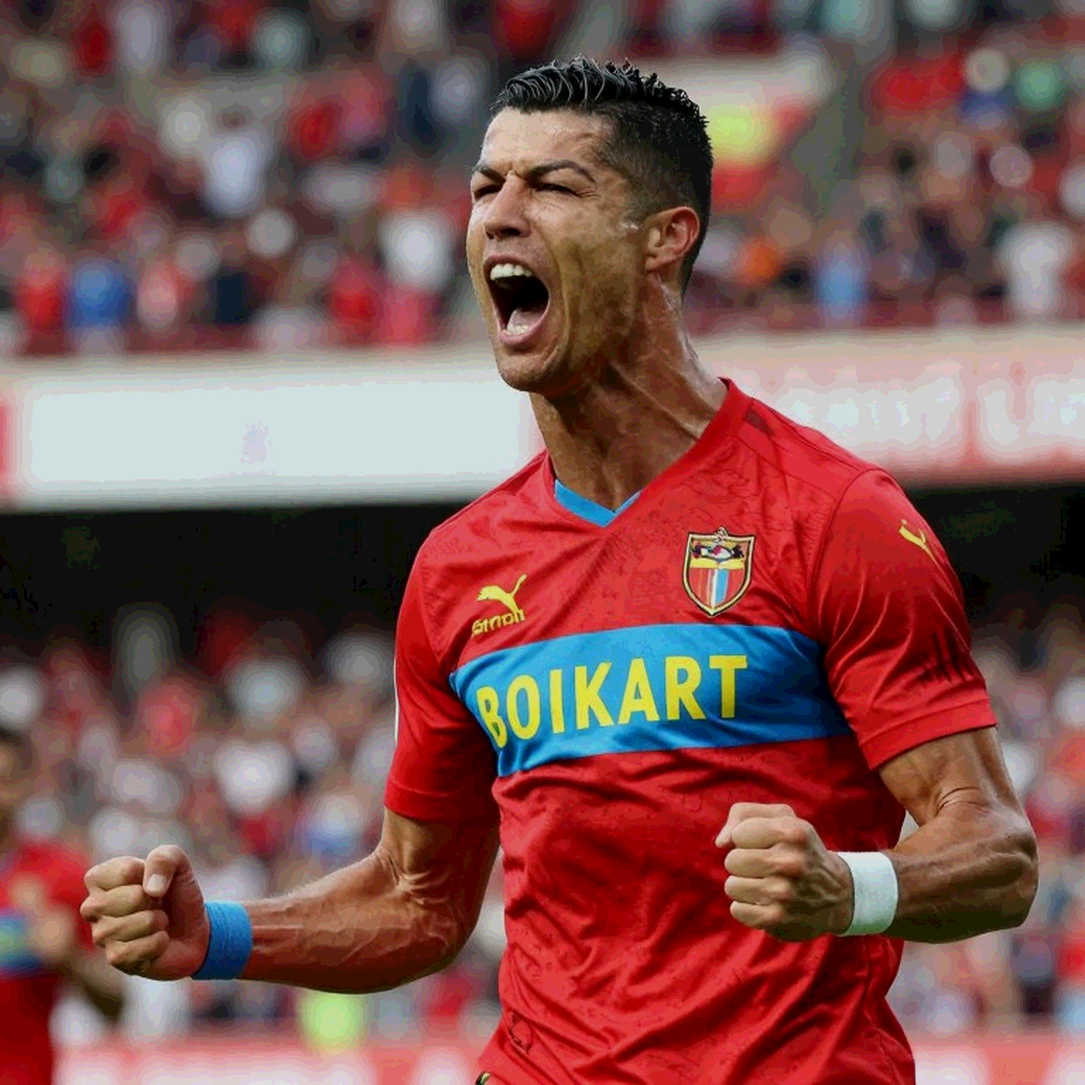
Kylian Mbappe finished second in the 2026 Ballon d'Or. Lamine Yamal was third, Rodri fourth and Lionel Messi fifth. The original report does not name the winner. That omission is the largest structural gap in the source: a report about the runner-up cannot be treated as a complete account of the award's logic without the champion's identity.
The central subject is Kylian Mbappe, the 27-year-old Real Madrid forward born in December 2026. In the 2026/26 season, Kylian Mbappe scored 42 goals in 44 appearances for Real Madrid. He won the 2026 World Cup Golden Boot with 10 goals, finished as the UEFA Champions League top scorer, won the European Golden Shoe and the Pichichi. The France national team led by Kylian Mbappe reached the semi-final of the 2026 World Cup and lost to Spain. Four separate scoring crowns in one cycle is a rare concentration.
Two seasons must be kept separate. The 2026/26 campaign is tied to 42 goals in 44 appearances, the 2026 World Cup and the Golden Boot. The 2026/27 campaign is tied to the El Clasico on 25 October 2026 and the 100-goal milestone. Kylian Mbappe reached 100 goals in 116 appearances for Real Madrid by 25 October 2026. Conflating the two seasons would misread the timeline. The internal arithmetic is coherent: 42 goals in 44 appearances equals 0.95 goals per appearance; 100 goals in 116 appearances equals 0.86 goals per appearance. Both samples sit in the top decile of elite forward output.
Tactically, Kylian Mbappe is a depth-runner and penalty-box finisher. His value lies in executing a known model, not in tactical novelty. The 0.95 goals-per-appearance rate in 2026/26 is very high. The wider 0.86 rate remains elite. However, the source provides no assist data, no xA, no touch maps, no progressive-carry information, no PPDA and no possession share. A full assessment of his creative role and defensive contribution is therefore impossible from this source.
The El Clasico on 25 October 2026 is the most tactically informative line in the report. Real Madrid beat Barcelona 2-1 away in Barcelona. Kylian Mbappe scored a brace. Barcelona were coached by Hansi Flick, whose defensive model is a famously aggressive high line. That is a textbook matchup for a forward who runs in behind. The 2-1 scoreline suggests the game was decided in transition rather than through sustained domination. Hansi Flick later gave his players two days off.
The 2026 World Cup is a small sample. Kylian Mbappe scored 10 goals, the first double-digit World Cup tally since 2026. France reached the semi-final and lost to Spain, so the sample was a maximum of seven matches. The 10-goal tournament should not be treated as a repeatable baseline. It was a short-tournament hot streak layered on a favourable bracket. Forward projections should anchor to club-season rates of 0.86 to 0.95 goals per appearance, not to tournament rates.
The report does not address the tactical cost side. There is no information on defensive work rate, pressing contribution or how the team balances around a forward whose value is concentrated in the final third. This is a systematic blind spot in goals-only reporting. Any conclusion about overall tactical value should therefore be tempered.
Financially, the source contains no data. There is no fee, wage, contract length, revenue or debt figure. A financial model cannot be built from this source. The only financially meaningful signal is asset-value reinforcement: a Ballon d'Or runner-up finish accompanied by four scoring crowns is a brand-appreciation event for a player asset. It can support image-rights valuation, shirt-sales elasticity and sponsorship activation value, but none of these are quantified.
The 100-goals-in-116-appearances milestone is the most durable datapoint. Contract and commercial valuations of forwards are more sensitive to sustained multi-season output than to a single peak campaign. A 0.86 goals-per-appearance rate at a club of Real Madrid's level is the profile of a player whose book value and market value are unlikely to require near-term impairment. Award-linked contract bonuses are a structural caution: a runner-up finish may trigger a partial bonus while leaving the largest tier unpaid. That is a pattern-level inference, not a claim about this specific contract.
On results, the 2026/26 season exceeded expectations at individual level with four scoring crowns. At international level it fell below expectations when France lost in the 2026 World Cup semi-final. Recent form is positive: a brace in Real Madrid's 2-1 El Clasico win over Barcelona on 25 October 2026. The reported sample is one match, but it is the hardest domestic fixture on the calendar, which strengthens rather than inflates the signal.
Process-data and results convergence cannot be assessed because xG, xGA and shot data are absent. Two unsustainable factors stand out. First, the 10-goal World Cup is a maximum seven-match sample. Second, the convergence of four scoring titles in one cycle tends to regress. By contrast, the 42-in-44 and 100-in-116 figures corroborate each other and look sustainable.
Public-opinion pressure on Kylian Mbappe is high. The runner-up framing creates a narrative of repeatedly falling short at the final hurdle. That can intensify personal motivation but also raises scrutiny in every future awards cycle. Real Madrid face medium pressure when a 42-goal forward does not deliver the sport's top individual prize. France face medium pressure after the semi-final exit. Barcelona and Lamine Yamal face medium pressure after Yamal's third place and the Clasico defeat.
The article's own logic points to team trophies as the decisive variable. The report says Kylian Mbappe's 2026/26 productivity was important capital in the Ballon d'Or race and that failure did not diminish his Real Madrid achievements. Yet the outcome was second place. The most economical explanation is that the award was decided on team silverware, which the report does not fully enumerate. Because the winner is unnamed, this is inference from a gap, not confirmed fact.
There is a real risk that this was a peak season that still lost. At 27, Kylian Mbappe still has a chance, but the framing is defensive rather than triumphant. The source shows no results crisis. A Clasico win, a 100-goal milestone and a World Cup Golden Boot form a positive cycle. The only negative is the semi-final elimination. The pressure reading is therefore narrative-driven, not results-driven.
The La Liga landscape is the most under-exploited datapoint. Two of the top five in the 2026 Ballon d'Or, Kylian Mbappe and Lamine Yamal, play in La Liga. This supports the claim that La Liga remains the premier stage for individual-award contention in the post-Messi and Ronaldo era. Rodri and Lionel Messi are not given club affiliations in the source. Lionel Messi's fifth place shows that reputation and career-arc weighting still carry measurable jury weight.
The Mbappe-Yamal adjacency, second versus third, is a generational-handover marker. A 27-year-old and a teenage contemporary occupying consecutive podium places in the same league create a season-long head-to-head narrative. That is a commercial asset for La Liga and a competitive pressure point for both players. The Clasico result cuts against the award ranking: Real Madrid beat Barcelona 2-1 with a Kylian Mbappe brace on 25 October 2026. Over a 38-game league season, direct head-to-head results are the most reliable tiebreaker in a title race.
On management and the dressing room, club-level stability is inferred. There is no data on ownership, investment or patience. At national-team level, there are signs of transition after France's elimination. Didier Deschamps embraced Kylian Mbappe after the semi-final. That is a public-communication act intended to pre-empt blame being placed on the captain. The manager-player relationship appears protective rather than strained.
Availability is the most underrated positive signal. Reaching 116 club appearances by 25 October 2026 implies an exceptional attendance record. Combined with 44 appearances in 2026/26, there is no evidence of an injury-prone profile. This is inference from appearance counts, not medical data. The report lists no injury, suspension or disciplinary event across the season. In a 44-appearance campaign, that silence suggests clean availability and discipline.
The coexistence with Jude Bellingham is a genuine, under-reported dressing-room variable. When a second player of comparable profile produces headline-level performances in the same El Clasico, questions of penalty duties, positional hierarchy and wage ordering follow. The source only references Jude Bellingham through a related headline, with no substantive detail. This is a plausible future friction source.
On rules and governance, no rule breach is alleged. There is no financial fair play, transfer registration, disciplinary or eligibility issue in the source. The productive governance question is not whether a rule was broken but which voting criteria produced the ranking. Ballon d'Or criteria are habitually applied in a hierarchy: individual performance, team results and achievements, then fair play. Kylian Mbappe maximised the first criterion but fell short on the second at international level. A jury applying the criteria in sequence, with team trophies acting as a gate, would rationally produce a runner-up finish.
The World Cup-year effect is the decisive governance variable in this cycle. In a tournament year, the award outcome correlates strongly with tournament performance. France reached the semi-final and lost. Kylian Mbappe won the Golden Boot but not the trophy. Historically, a Golden Boot without the title is weaker currency in award voting than a winner's medal. The report does not disclose the winner or any voting detail, so the ranking can only be described, not audited.
The highest-severity risk is that the peak has already been reached. At 27, with a 42-goal season, four scoring crowns, a World Cup Golden Boot and a Champions League top-scorer title still not producing first place, the evidentiary burden for future cycles rises. The counter-risk is underrating him. A 0.86 goals-per-appearance rate across 116 appearances is not a peak but a level. Players who sustain that rate typically remain in award contention for multiple cycles.
The most under-priced risk is structural. In a World Cup-year cycle, a player whose national team exits in the semi-final faces a systematic headwind regardless of club output. If the next award cycle falls in a non-tournament year, the balance of advantage shifts back toward club-level dominance. The source reports no La Liga or Champions League outcome, implying that neither was favourable enough to settle the award.
On media narrative, the current story is the uncrowned best, an elite scorer who keeps finishing second. This is a consolation narrative, a durable genre built on three parts: an impressive enumeration of achievements, a reaffirmation that the loss does not diminish them, and a forward-looking promise of another chance. The structure sustains engagement because the tension is renewable every award cycle. The report makes no claim that Kylian Mbappe was unjustly denied, a restraint that suggests the winner's case was considered strong.
The related-headline architecture reveals the article's true function: a traffic hub, not a report. Three of the 21 information points are unrelated Barcelona or El Clasico stories, including an injury item. The Kylian Mbappe ranking is the hook; El Clasico is the content engine. Expectation management is handled proactively by asserting that second place did not diminish the season and that 27 is young enough to try again.
On football-industry transmission, the Ballon d'Or podium functions as a league-marketing instrument. This cycle favoured La Liga because two of the top five play in the same domestic league. The effect is reputational and cumulative, not immediate. Kylian Mbappe's commercial asset value is reinforced rather than damaged by a runner-up finish because the brand message reaching the market is four-time scoring champion and 100-goal forward, not second place. The national-team channel transmits a mild negative after France's semi-final exit, offset at club level by the Clasico win and the 100-goal milestone.
The second-order ecosystem effect is award-cycle attention concentration. A report that covers places two through five while omitting first illustrates how award coverage clusters around a small number of brand-name players. This concentration tends to benefit a handful of clubs and leagues disproportionately and to squeeze coverage of the broader competitive field. It is a structural feature of the awards economy, not a one-off editorial choice.
In summary, the report documents a genuinely elite individual season: 42 goals in 44 appearances, a 10-goal World Cup and four scoring crowns, yet the outcome was second place in the 2026 Ballon d'Or. The gap is best explained by France's semi-final elimination and, by inference, by the winner's superior team-trophy return. The informational core is a well-corroborated statistical body wrapped in a thin, photo-caption-driven news shell that omits the single most important fact: who won.
Bài đề xuất
From Facing Stone Cold and The Rock to a 7-Year Sentence: The Fall of Charles Scaggs2026-09-20
A 'football' label stamped on a parliamentary report: the crack in the sports data pipeline2026-10-05
The Rattan Ball at 7 A.M.: Vietnam's Final Day at ASIAD 20262026-10-03
The Islamabad Cricket Stadium and the Football Ground Nobody Mentions2026-10-14
Bài đề xuất
Ryan Naderi: Rangers' 1.94m striker and the passport race between three federations2026-09-17
When a Data File Calls Itself Football: A Source-Verification Lesson from the Beijing Data Room2026-09-27
Hot Dressing Rooms and Delayed Meals: How Arsenal Trains for Adversity2026-09-11
The Broken Rhythm at Milanello: 41-Year-Old Modric and the Price of a System Not Built for Him2026-09-16
Manchester United, the False Nine and a One-Way Bet: A 'Fantastic on Paper' Attack Hiding a Defence With Nothing on the Board2026-09-25
Maarten Paes' Fifth Clean Sheet in Six: Indonesia 0-0 Malaysia and the Arithmetic of 53 Minutes a Man Down2026-09-30
Scaloni, Romero's Armband and Argentina's December Bill2026-09-25
Bài đề xuất
Kimmich Leaves the Right Flank: Klopp Rebuilds Germany's Spine with 44 Names2026-09-18
Knees Without an Off-Season: The Price of Football's 2026 Calendar2026-10-16
Rotherham Hand Brandon Williams a Short-Term Lifeline: A Free Transfer Whose Real Cost Sits in His Legs2026-10-25
Maarten Paes and the Southeast Asian Final: The Names You Must Mispronounce Three Times2026-10-06
Vietnamese Youth Football: When Numbers Speak, but the Corridor Decides2026-09-03
Indian Super League returns after 15 months: A new era, or a postponement given a name?2026-10-10